Medical technology companies can use build-to-buy contracts to create new solutions with strategic partners and establish an acquisition opportunity. These partnerships can help medical device companies gain new innovative ideas without the need for them to develop all their capabilities in-house. They can provide capital, knowledge and a connection to an acquirer for start-ups.
There are also many challenges in the model. The terms of the acquisition, changing corporate priorities, longer development timelines and IP issues can all threaten to derail the value of a deal before it is complete.
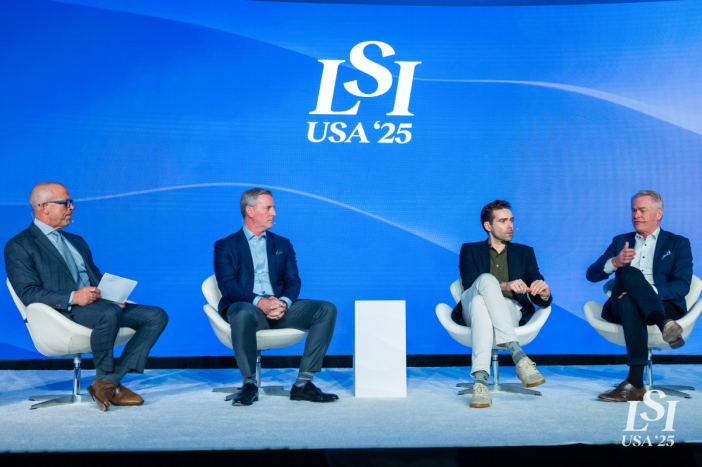
A panel of industry leaders at LSI USA ’25 looked at these problems and discussed in detail what’s needed to make build-to-buy arrangements a reality. Joe Mullings moderated the discussion, which included Addie Harris, Josh Makower, Andrew ElBardissi of Deerfield Management and Ramin Mousavi.
What their discussion underscored is a key lesson for the Medtech sector: successful build-to-buy deals require more than just innovation funding and a shared passion for innovation. They need to have clear milestones, incentives, governance and an honest assessment of what would happen if the relationship changes.
Familiarize yourself with the Two Types of Build-to-Buy Agreements.Know the Two Types of Build-to-Buy Agreements.
Build-to-buy may be used to refer to several arrangements and it is important to understand these differences before entering into a build-to-buy agreement.
Harris said there are two general models: agreements that are created to help develop new innovation and agreements that are established to fill a gap in an existing company’s product portfolio.
“You have your ‘all pure innovation build-to-buy’ and you have your ‘fill-a-gap-in-our-portfolio build-to-buy,’” she said.
In the first model a strategic company gives funding and resources to develop a technology in an area of interest. The partnership can be with an academic institution, early stage business or an external development team.
The second model assumes the strategic buyer has a more specific objective. It is aware of what capability or product it is aiming to create and seeks a partner to provide it.
Innovation-based arrangements can be more accurately viewed as build-to-invest, rather than an acquisition, since the investment does not have to translate into an acquisition, Makower said.
Partnerships are there, but it doesn’t always translate into a sale at the end.
The difference is relevant because each party might have different expectations of entering into the same agreement. The partnership can be seen as a fast-track acquisition path for the startup and a chance to investigate a technology for the strategic firm.
Clear ownership must be established from the start, Harris said.
If the question is being asked – who funds development – then the answer is not restricted to the founders. It’s what the investor or strategic partner gives back, what rights the startup retains, and whether the structure helps the startup reach its goals in the long-term.
The Financial Trade-Off: Funding vs Future Upsides
However, it is possible for a build to buy agreement to seem appealing due to its mixture of external funding and possible acquisition path. For strategic buyers, they’re getting a piece of innovation, and for startups they’re getting financial support, technical knowledge and industry validation.
In the context of Medtech startups, it can translate to weighing opportunity cost against short-term savings of a build to buy transaction. Founders should be aware of the limits that they are accepting, the rights that they still have, and the conditions in which they can pursue other business and investment opportunities.
The importance of timing and corporate priorities.
Even if the technology works well, development and the time to a decision on acquisition can cause problems.
Mousavi likened “build-to-buy” deals to a long marriage commitment that gradually provides both sides with clues as to whether their expectations mesh.
You make a contract where the wedding is in the future, but the more you get to know one another, the more you discover things you don’t like,” he stated. The harder off you do, the worse you do it feel, since in an open market you would be able to find a better deal.
This observation conveys a key paradox of the agreements. Learning progressions can increase the market value of a startup. If the terms of the takeover are agreed early and are not properly tied to that development, the startup might feel like it’s giving up its upside.
Ensuring the safeguarding of Intellectual Property, Talent and Long-Term Value
Just because an acquisition has occurred, it doesn’t mean that value during development is preserved. Integration can also pose fresh problems, especially if the startup’s success is driven by a unique team, culture or expertise that can be hard to replace.
In a successful build-to-buy deal, certainty is a must.
A clear message from the panel was that compliance in successful agreements is best through certainty and not an expectation that one will occur at some point in the future.
The “easy solution” to this situation is certainty, ElBardissi said. If you are predicting and guaranteeing that the company will be sold when certain actions and milestones are met, then everyone has a stake in it.
This requires specifying the conditions of the acquisition in detail. The agreement will outline the milestones, the evidence needed to prove the milestones, how progress will be checked and the responsibilities of each party to the agreement.
Long-Term Medtech Partnerships are Built on Trust and Reputation.
The panel also addressed larger implications of suboptimal agreements. A strategic buyer or startup can have a significant impact on future investment and business relationships in a specialized industry.
Creating a stronger partnership for the future.
The panel at LSI USA ’25 emphasized the opportunities and the challenges as well as build-to-buy arrangements. Such arrangements may work well for developing new technologies and addressing strategic portfolio requirements, but are not the alternative to a robust commercial sense and a transactional framework.
Medtech startups need to be aware of the pros and cons, secure their IP, maintain proper flexibility and set up enforceable milestones. It takes an ongoing commitment of in-house resources, reasonable growth strategies, and a sense of obligation and responsibility from strategic buyers to succeed.
Key Takeaways
- Build-to-buy contracts can be a facilitator for innovation, but firms need to differentiate between those contracts that are intended to develop new technologies and those that are intended to meet a portfolio need.
- Acquisition triggers, milestones, and contract protections minimize uncertainty for both acquiring and emerging companies.
- For Medtech startups, it is imperative to be aware of the potential future constraints of funding and acquiring a company, in lieu of future options.
- Prior to the transaction, work the issues of who owns the intellectual property, who is going to be retained and who not, and what are the implications for cultural integration?
- The key to successful Medtech partnerships lies in trust, transparency and a realistic “what if” scenario when the transaction fails.
- Investors and strategic buyers ought to assess the commercial opportunity, not just the technology being developed, and the future business relationship.